
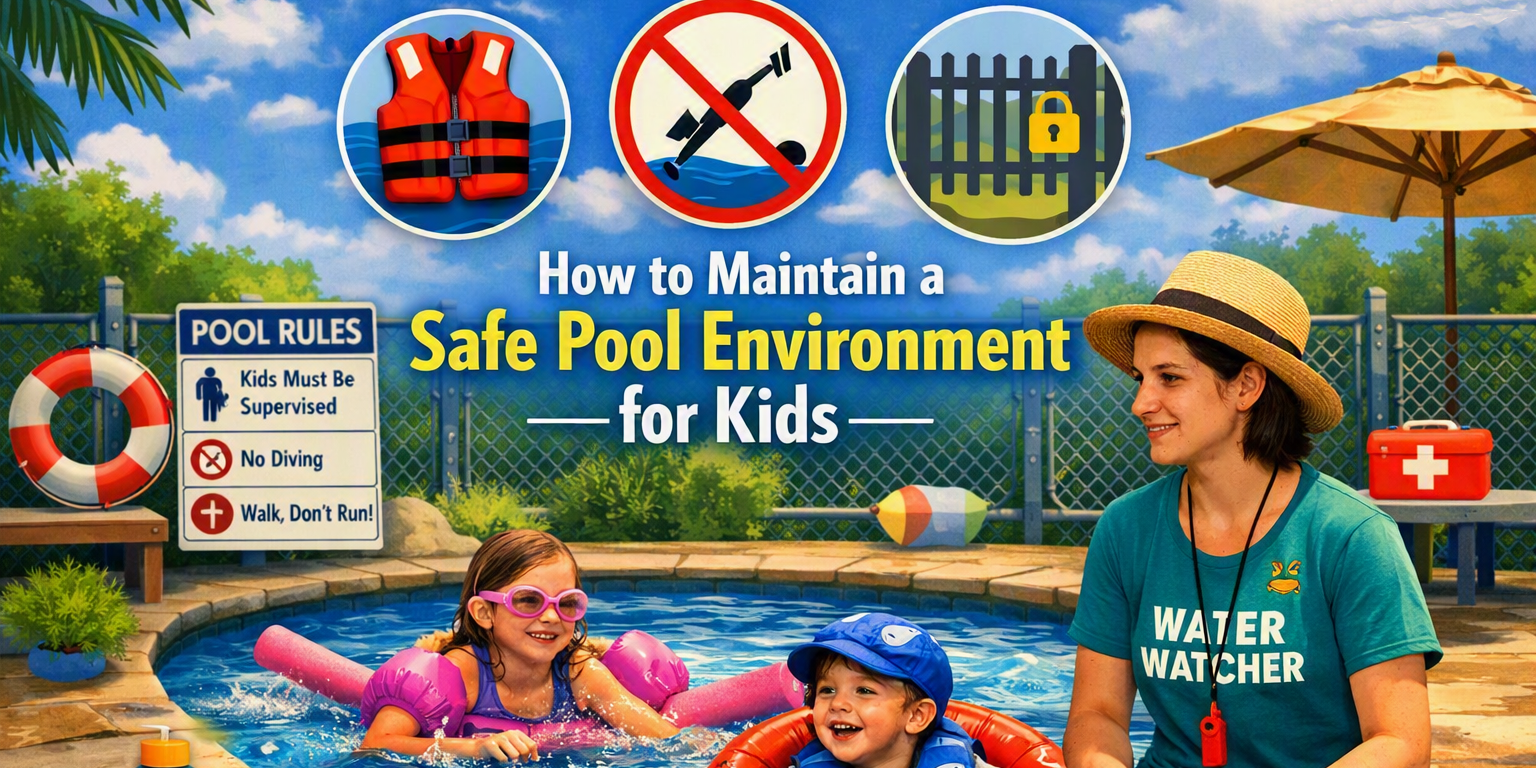
Nothing says summer like the sound of kids splashing around in the pool. But that fun only stays fun when the water stays safe. Drowning remains one of the leading causes of accidental death in young children, and most incidents happen fast, quietly, and close to supervising adults. The good news: a few consistent habits can dramatically lower the risk. Here’s how to keep your pool a place for joy, not tragedy.
1. Designate a Water Watcher
The single most effective safety tool isn’t a gadget — it’s a person. Assign one adult as the “Water Watcher” whenever kids are in or near the pool. This person’s only job is to watch the water, with no phone, no book, no side conversations. Drowning can happen in under a minute and is often silent, so continuous, undistracted eyes matter more than anything else on this list.
Tips for an effective Water Watcher rotation:
- Swap watchers every 15–20 minutes to keep attention sharp.
- Use a physical marker (a lanyard, a card, a designated chair) so everyone knows who’s on duty.
- Never let the Water Watcher multitask — no grilling, no yard work, no texting.
2. Install Layers of Barriers
Barriers buy precious time if a child wanders toward the pool unsupervised.
- Four-sided isolation fencing that separates the pool from the house and yard, with a self-closing, self-latching gate.
- Door and window alarms on any door leading to the pool area.
- Pool alarms that detect surface disturbance or submersion.
- A power safety cover that can fully secure the pool when not in use.
No single barrier is foolproof — the strength is in layering several together.
3. Teach Kids to Swim — and Teach Them Pool Rules
Formal swim lessons reduce drowning risk significantly for children as young as one year old. Pair lessons with clear, consistently enforced rules:
- Walk, don’t run, on the pool deck.
- No swimming without an adult present.
- Stay away from drains and suction outlets.
- Life jackets (not water wings or noodles) for weak or inexperienced swimmers.
4. Keep Rescue Equipment Within Reach
A reaching pole, a ring buoy, and a first aid kit should live poolside at all times — not in a garage or shed. Every adult who supervises the pool should know CPR and basic water rescue techniques. Consider a refresher course each season.
5. Clear the Deck of Distractions and Hazards
- Remove toys from the pool when it’s not in use — a floating toy can tempt a curious toddler back to the water.
- Keep the pool area free of tripping hazards and slippery buildup.
- Store chemicals in a locked, ventilated space away from children.
6. Take Our Online Water Watcher Course
Being an effective Water Watcher isn’t just about paying attention — it’s a skill you can actually train for. A short online Water Watcher course walks you through what active supervision really looks like, how to recognize the subtle, often silent signs of a child in trouble, and how to respond in the critical first seconds of an emergency.
What the Course Covers:
- Water Watcher standards and requirements. What the role actually entails, who’s qualified to take it on, and the prerequisites for completing the course.
- Water Watcher vs. lifeguard. The course is clear-eyed about what a Water Watcher can and can’t replace — you’ll learn the similarities, the key differences, and exactly when it’s appropriate to rely on a Water Watcher instead of a certified lifeguard.
- Recognizing types of swimmers. One of the most valuable skills taught is learning to tell a normal swimmer apart from a distressed swimmer, an active drowning person, and a passive drowning person — categories that look very different from each other and require different responses.
- Surveillance and scanning technique, plus the RID Factor — the research-backed explanation of why drownings happen even when someone is “watching,” and how to scan the water so nothing slips past you.
- Layers of protection. How a Water Watcher fits into a broader safety system alongside fencing, alarms, and supervision — reinforcing that no single layer should be relied on alone.
- Emergency Action Plan basics, including when to call your local emergency number and when an incident needs to be formally reported.
- Assisting swimmers with rescue equipment, such as reaching extensions from the deck or in the water using a rescue tube or noodle, a shepherd’s crook, and throwing assists with a ring buoy — plus how to safely secure a swimmer once they’ve been reached.
- Supplemental skills like station rotations, basic pool rules, handling confrontations calmly, timing rest breaks, and using a whistle to communicate clearly.
- The course wraps up with the Water Watcher Pledge — a personal commitment to stay focused and present — along with a list of additional resources for further reading.
The course usually takes 45 minutes to complete, and it’s a great way to onboard grandparents, babysitters, and neighbors before they take a shift watching the water. Many families make it a household rule: anyone who wants to be added to the Water Watcher rotation completes the course first. It’s a small time investment that turns “keep an eye on the kids” into a real, repeatable skill.
7. Set — and Post — House Rules for Guests
When friends and family come over, make sure they know your pool rules too. A quick reminder at the gate (“we designate a Water Watcher here — mind if I add you to the rotation?”) keeps everyone on the same page and shares the responsibility.
The Bottom Line
Pool safety isn’t about one big investment — it’s about layering simple habits: dedicated supervision, physical barriers, swim skills, and quick access to rescue tools. Build these into your routine, and your pool stays what it should be: a source of summer memories, not close calls.
Stay safe, stay watchful, and enjoy the water.