
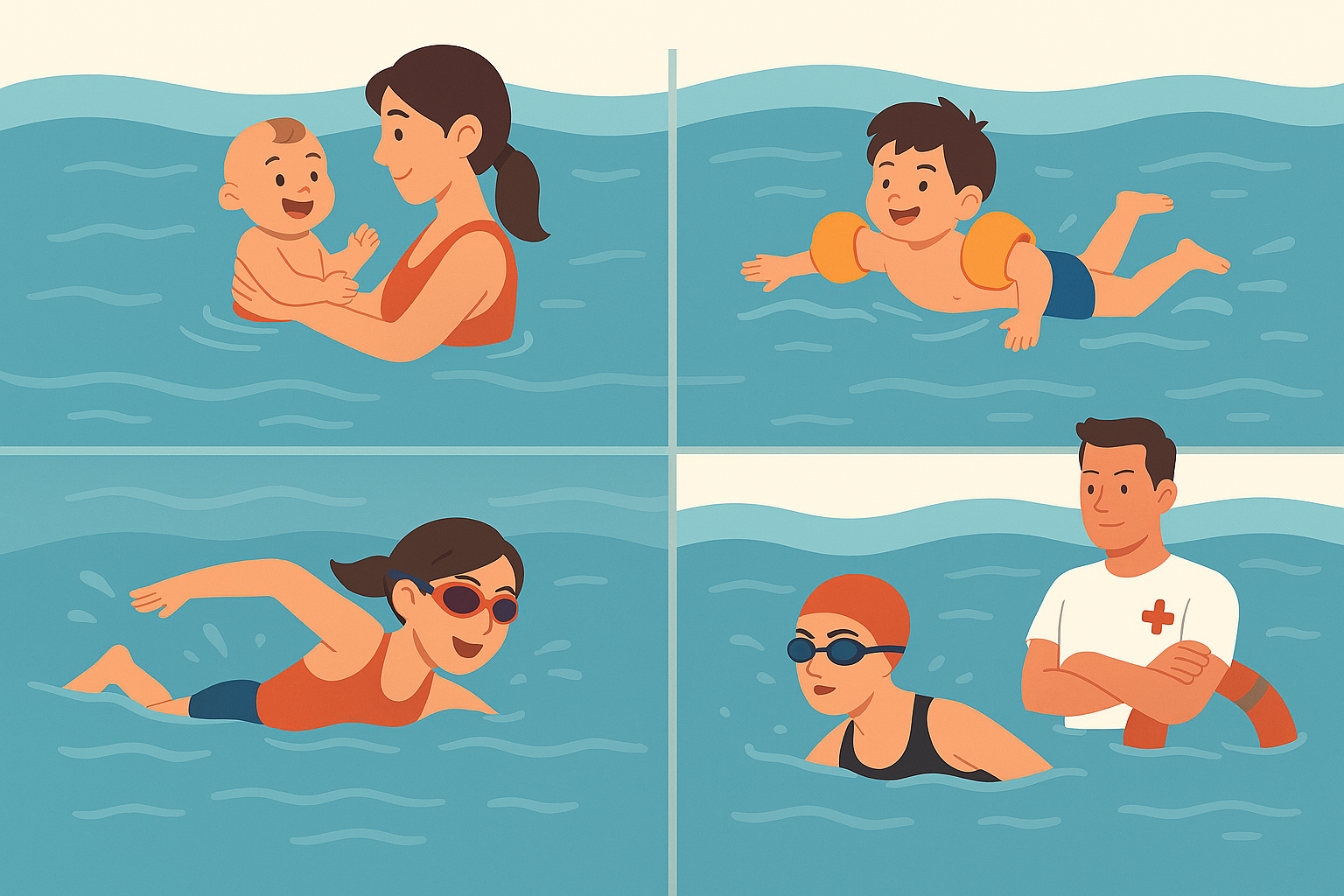
Swimming is one of the best activities for physical fitness, relaxation, and family fun. From toddlers splashing in the shallow end to seniors enjoying water aerobics, swimming benefits people of all ages. However, water safety needs vary significantly across age groups. Understanding age-appropriate precautions can prevent accidents and ensure everyone enjoys the water safely.
Let’s explore safe swimming practices tailored to different age groups.
The Importance of a Water Watcher
Before diving into age-specific safety tips, it’s important to highlight one powerful prevention strategy: the Water Watcher system.
A Water Watcher is a responsible adult assigned to actively supervise swimmers without distractions. This means:
- No phones
- No reading
- No socializing
- No alcohol
- No multitasking
The Water Watcher’s sole job is to continuously scan the water and stay within quick reach of swimmers, especially children.
For gatherings or pool parties, rotate the Water Watcher role every 15–30 minutes to prevent fatigue. Some families use a physical item (like a lanyard, bracelet, or card) to clearly identify who is “on duty.”
Drowning is often silent and can happen in seconds — even in crowded pools. Having a designated Water Watcher dramatically reduces risk.
Infants and Toddlers (0–4 Years)
Young children are at the highest risk of drowning, often in shallow water. Constant supervision is critical.
Safety Tips:
- Always maintain touch supervision: Stay within arm’s reach at all times.
- Never rely solely on floaties or inflatable toys: These are not life-saving devices.
- Enroll in water familiarization classes: Parent-child swim lessons can build comfort and awareness.
- Secure pools at home: Install four-sided fencing with self-closing, self-latching gates.
- Empty bathtubs and kiddie pools immediately after use.
- Assign a dedicated Water Watcher anytime children are near water.
Even a few inches of water can pose a danger to toddlers, so vigilance is essential.
Children (5–12 Years)
As children grow more confident in the water, they may overestimate their abilities.
Safety Tips:
- Teach proper swimming skills: Formal swim lessons are strongly recommended.
- Establish water rules: No running, pushing, or diving in shallow areas.
- Ensure active supervision: A Water Watcher should always be present.
- Teach emergency skills: Floating, treading water, and calling for help.
- Encourage buddy swimming: Never swim alone.
Helping children understand boundaries and respect water reduces risk significantly.
Teenagers (13–18 Years)
Teens may engage in risky behaviors, especially in social settings.
Safety Tips:
- Avoid alcohol and swimming: Alcohol significantly increases drowning risk.
- Discourage risky stunts: Diving in unknown waters can cause serious spinal injuries.
- Swim in designated areas: Prefer locations with lifeguards.
- Be cautious in open water: Teach awareness of currents, tides, and weather conditions.
- Stay hydrated and apply sunscreen regularly.
- Younger teens should still have supervision or a responsible Water Watcher nearby.
Peer pressure can influence decision-making, so open discussions about safety are important.
Adults (19–64 Years)
Adults often balance recreation, fitness, and supervising children while swimming.
Safety Tips:
- Know your limits: Don’t overestimate endurance, especially in open water.
- Learn CPR and first aid: Quick action can save lives.
- Warm up before intense swimming: Prevent muscle cramps.
- Be cautious with alcohol: Avoid drinking before swimming.
- Check health conditions: Heart conditions or medications may impact swimming safety.
- If children are present, assign a Water Watcher instead of assuming “everyone is watching.”
Even experienced swimmers should prioritize awareness and preparation.
Seniors (65+ Years)
Swimming is excellent low-impact exercise for older adults, but certain precautions are necessary.
Safety Tips:
- Consult a healthcare provider: Especially if you have heart, balance, or respiratory issues.
- Choose supervised environments: Swim where lifeguards are present.
- Use handrails and non-slip footwear: Prevent slips and falls around pool areas.
- Avoid swimming alone: Have a companion nearby.
- Stay hydrated and avoid overheating.
Water aerobics classes designed for seniors can provide safe, structured exercise.
Open Water Safety for All Ages
Whether at a lake, river, or beach:
- Swim only in designated areas.
- Understand rip currents and how to escape them.
- Check weather conditions before entering the water.
- Wear Coast Guard-approved life jackets when boating.
- Never swim alone.
- Assign a Water Watcher for children, even at beaches with lifeguards.
Open water conditions can change quickly, making extra caution necessary.
Final Thoughts
Swimming is a life skill and a lifelong source of enjoyment. While safety strategies differ by age, one rule applies to everyone: respect the water.
One distracted moment can lead to tragedy — but a focused Water Watcher, proper supervision, and age-appropriate precautions can dramatically reduce risk.
By adopting safe swimming practices at every stage of life, families can create positive, safe water experiences that last a lifetime.
Stay safe, stay alert, and enjoy the water responsibly.